
Strength training for longevity after 50
Personal training in Singapore for adults in their 50s, 60s and 70s. We build the muscle and strength that keep you independent as you age, around your joints, any injuries and your diary.
Book a Free Consultation- 500+ Google reviews
- Voted top personal trainer by Expat Living readers, 2020 to 2026
- Studio at 105 Cecil Street, Tanjong Pagar
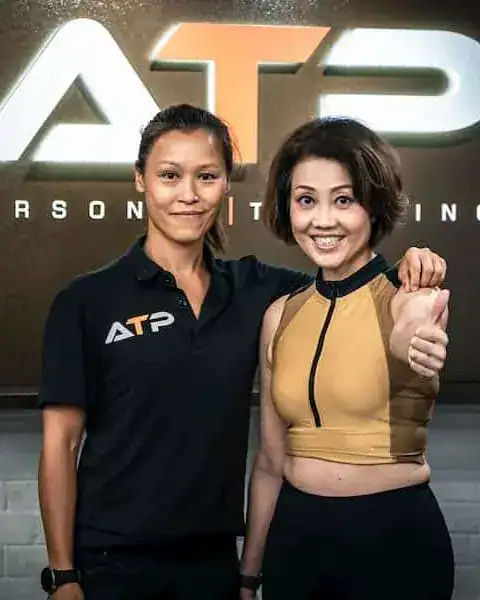
Why muscle matters after 50
Muscle and strength decide how well you move and live on your own later in life. Both can be built at any age.
Adults lose approximately 3 to 8% of their muscle mass per decade after the age of 30, and the loss is faster after 60.1
What we do: Two to three strength sessions a week, with the weights increased as you get stronger.
Muscle-strengthening exercise is associated with a 15% lower risk of death from any cause, with the lowest risk at about 40 minutes a week.2
What we do: Every session is built around strength training, so two sessions a week covers it.
Exercise programmes reduce the rate of falls in people aged 60 and over by 23%. Balance and functional exercises give the clearest benefit.3
What we do: Leg strength, balance and carrying exercises are part of every programme.
How we measure
Skinfold calipers every week
Fat and lean mass tracked separately. The scale alone cannot tell fat from muscle.
Every working set logged
Exercise, weight and reps recorded in the ATP app, so strength gains are on record.
A monthly review
You and your coach go through the numbers every month and set the next targets.
Results from clients over 50
Real ATP clients. Each number is from their published story.
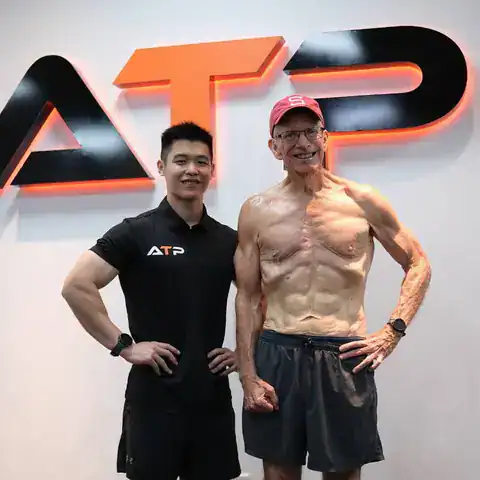
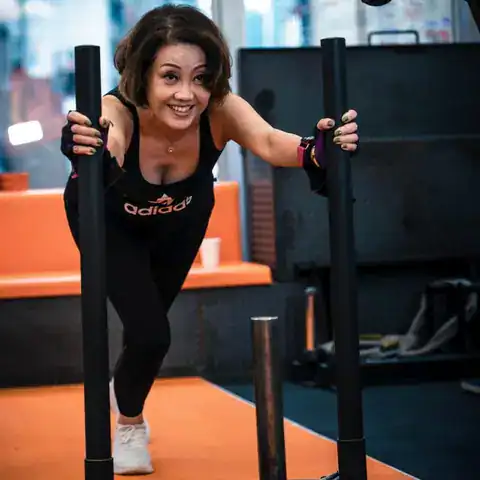
Nora F., 60, Hong Kong
Her spine bone density score. It had been falling; a year of strength training turned it around.
Read Nora's story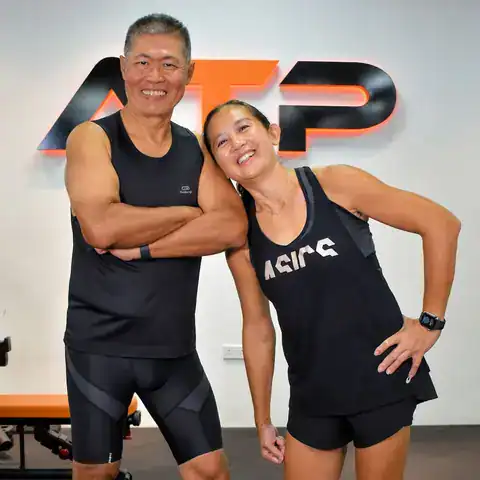
LT and Shirley, both in their 50s, Singapore
Lost between them: LT 27 kg, Shirley 13 kg.
Read their story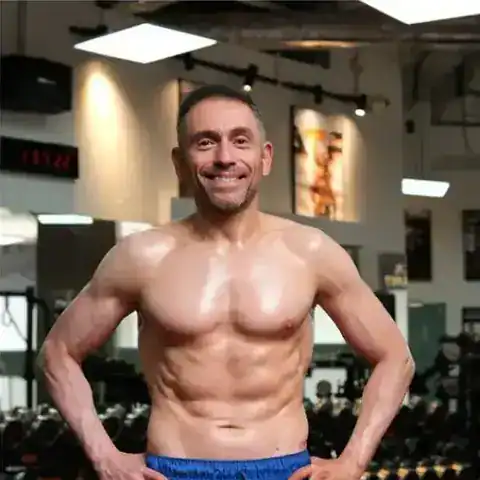
Tal, 50, Singapore
Body fat, while running a shipping business with constant travel.
Read Tal's story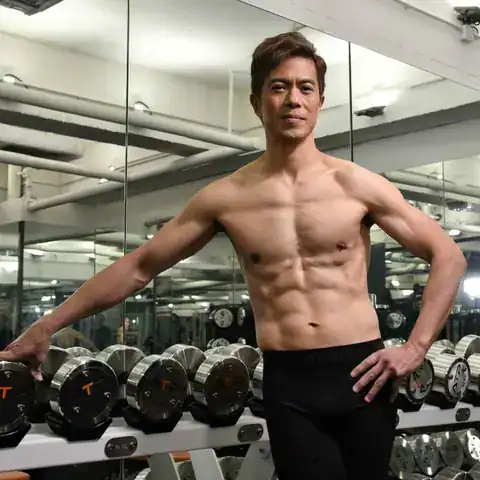
Byron Mann, actor, 53, Hong Kong
Lost, with about 15 lb, to get camera-ready for a role.
Read Byron's story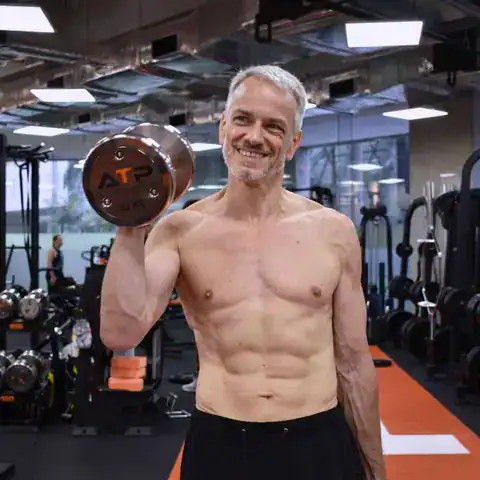
Benoit, 50, Singapore
Reached the best shape of his life at 50, and is still there two years later.
Read Benoit's storySwipe for more
How it works
Free consultation
A sit-down chat with a senior coach about your goals, history and schedule.
A plan built around you
A strength programme around your joints, injuries and diary, plus a nutrition plan.
Two to three sessions a week
One-to-one at the studio. Your coach teaches each lift and sets the weights.
Support between sessions
Check-ins and messages in the ATP app, and changes when travel or work get in the way.
Built around your body
Programmes are written around an injury, not through it. Before you start, we ask about medications, recent surgery and any limits from your doctor or physio.
Lower back
Start with the positions and loads you can train without pain. Hip and trunk strength first.
Knees
Depth, stance and load set to what your knees tolerate, then increased gradually.
Shoulders
Pressing angles adjusted. Overhead work waits until it is pain-free.
Who this is for
- Women after menopause rebuilding strength (see personal training for menopause).
- Men whose strength and energy have dropped in their late 40s and 50s.
- People returning after years away, an injury or surgery.
In their words
“I look forward to each workout and am very pleased with the results. And at 70 years old I am the oldest guy in the gym but am in the best shape of my life.”
“As you get older, you start to lose the ability to use your body and I didn’t want to get to a point where I struggled to climb stairs.”
“I found that building some muscle greatly improved my running times and with better posture I no longer have back pain from sitting at my desk for long periods of time.”
Swipe for more
Who coaches you
Every coach holds a recognised personal training certification or an exercise science degree, completes ATP's apprenticeship and is trained in the ATP Method. Senior leadership reviews each coach's client results every month.
Questions
Is it too late to start strength training in my 50s, 60s or 70s?
No. Muscle responds to strength training at any age, including in people aged 75 and over (source 4). We start with the movements and weights you can do well, and build from there.
Will I get injured lifting weights at this age?
The main risks are poor technique and weights that go up too fast. Your coach teaches each lift, starts below what you can manage and increases the weight only when the movement is solid.
I have arthritis, joint pain or a bad back. Can I still train?
Usually, yes. Your coach writes the programme around the problem, choosing exercises, ranges and loads that do not aggravate it. If a physio or doctor has given you limits, the programme follows them.
How often should adults over 50 train?
Two to three sessions a week with your coach, with a rest day between harder sessions. Between sessions you log meals and any extra activity in the ATP app, and your coach checks in.
Do I need to lose weight before I start?
No. You start where you are. Strength training and the nutrition plan are how your body composition changes.
Do you work with my physio or doctor?
Yes. Tell your coach what your physio or doctor has advised, and the programme follows it. ATP coaches do not diagnose or treat injuries or give medical advice.
What does it cost?
It depends on how many sessions a week you choose. Your coach goes through the options and prices at the free consultation. There is no obligation to sign up.
Book a free consultation
Three details. A coach will contact you to arrange a time.
- Meet a senior coach at our Singapore studio.
- Talk through your goals, any injuries and your schedule.
- No payment and no obligation to sign up.
Your details stay with ATP. Or message us on WhatsApp: +65 8960 3631